Using GPR for Tunnel Inspection: Ensuring Safety and Longevity
Tunnels are critical components of global infrastructure, but ensuring their long-term safety requires more than just visual checks. As infrastructure ages, the need for advanced tunnel structural health monitoring becomes vital.
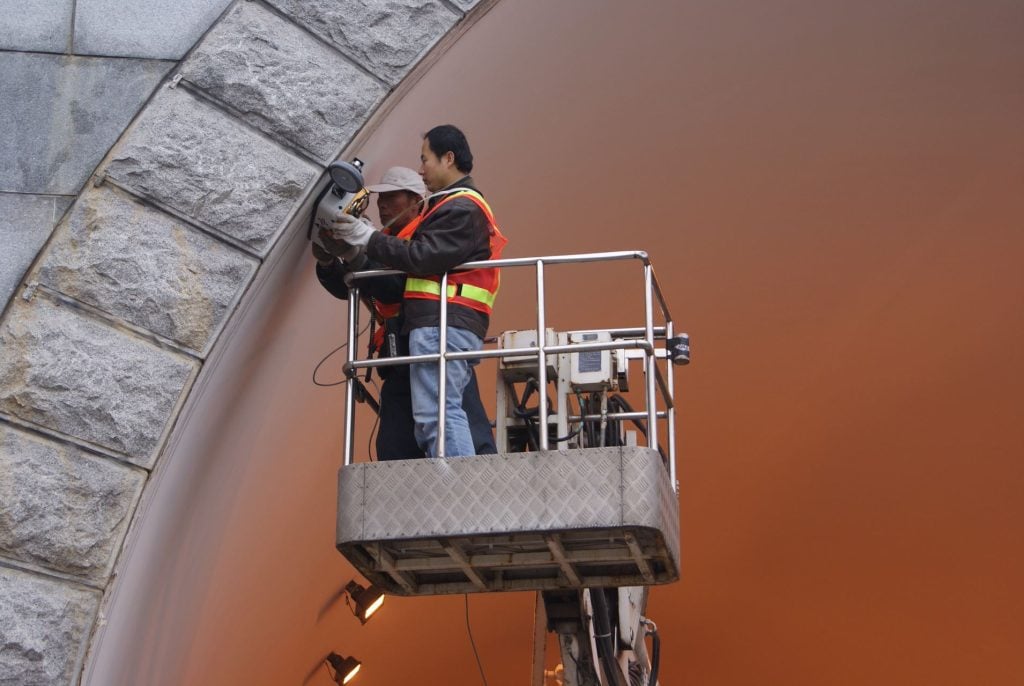
Using Ground Penetrating Radar (GPR) for tunnel inspection provides a fast, non-destructive way to evaluate concrete integrity, detect voids, and map reinforcement. Without consistent, data-driven tunnel maintenance, aging structures can lead to costly transit delays, safety hazards, and catastrophic structural failure. Safe, efficient, and constant evaluation of all our tunnels is therefore needed.
The problem with Tunnel Inspections
The rate in which a tunnel is deteriorating is dependent on many different factors, such as environmental, geological, materials used, construction method etc. Life span estimations are unreliable. Unexpected and untimely problems are common. Some of the problems include movements in bedrock causing fractures in tunnel lining, water seepage and other structural defects. Voids and lining separation may collect water causing stress and failure, especially during winter climates. Rapid and precise evaluation methods and tools are therefore needed.
Different Methods for Tunnel Inspection
The methods in which a tunnel can be inspected vary to a certain extent with what kind of tunnel and what purpose the tunnel fulfils but a non-destructive and rapid method is preferred. Common methods include direct and mechanical methods, infrared thermography, multi-spectral, ultra-sonic methods, and Ground Penetrating Radar (GPR).
GPR as preferred method for Tunnel Inspection
Due to advances in GPR development, the GPR method is in many areas around the world quickly becoming the preferred method for tunnel investigations.
For tunnel inspection GPR is:
- Easy-to-use
- Non-invasive
- Rapid and light-weight
GPR can successfully detect and track:
- Fractures, both in lining and in the bedrock behind.
- GPR can locate risk zones, such as locating areas where lining separation and corrosion is present.
- GPR gives in most cases instant results at site, whereas other methods usually need more thorough and tedious evaluation.
Further Reading
- EU Directive 2004/54/EC – Minimum safety requirements for tunnels – Regular structural assessments are vital to meet the EU minimum safety requirements for road tunnels.
- FHWA InfoTechnology: Tunnel – Ground Penetrating Radar (GPR) – For a detailed breakdown of how GPR detects voids and reinforcement in concrete, see the FHWA’s guide on tunnel GPR technology.
- ASCE Library: GPR for Quality Control in Tunneling – Research published in the ASCE Library highlights GPR as a primary method for identifying internal pathologies in tunnel structures.